

Cart
0
If you've been diagnosed with PCOS, or suspect you have it, or have been told your symptoms are "just hormones," there is something you need to know.
Medicine just caught up to what functional health practitioners have been saying for years.
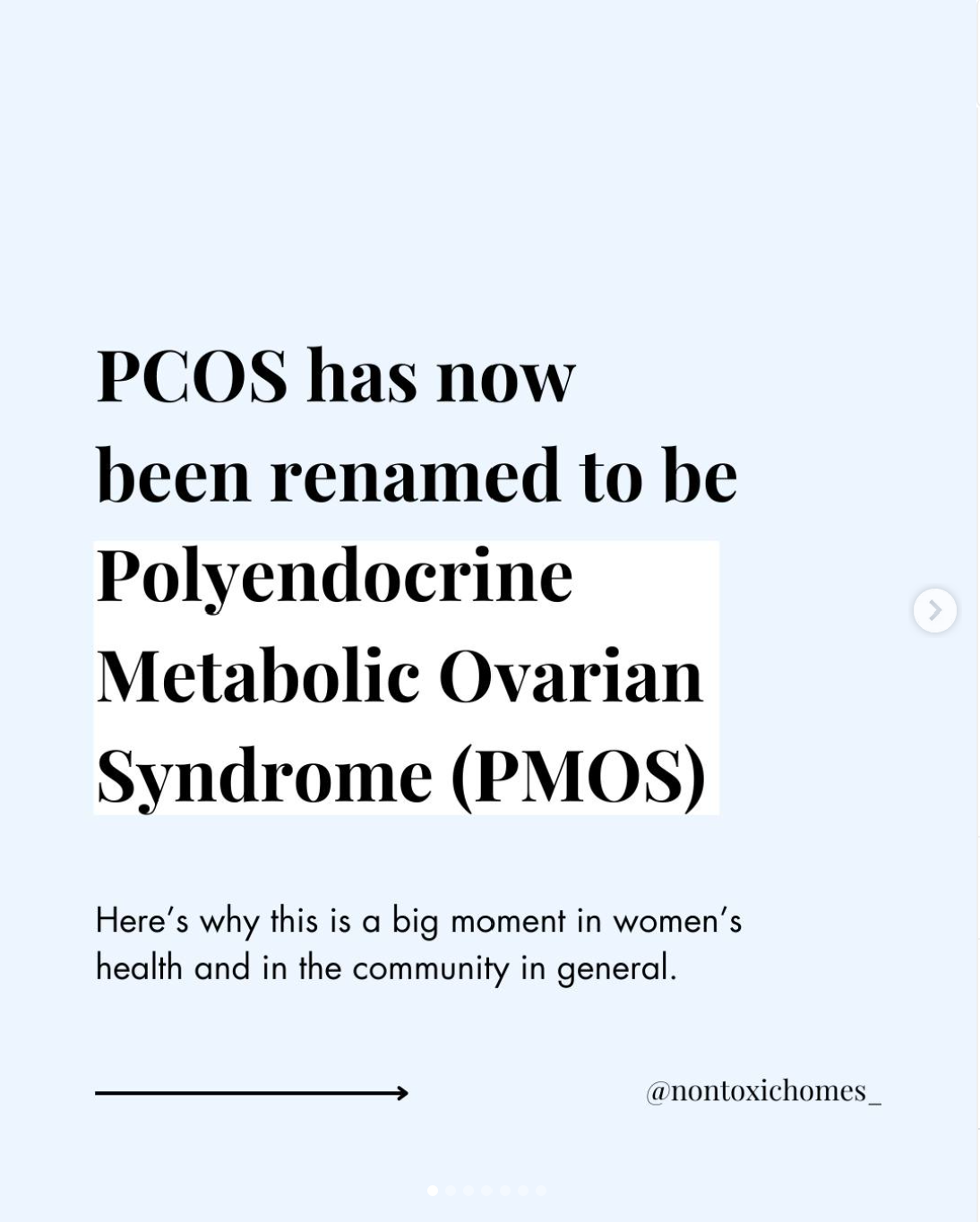
In May 2026, a landmark global consensus published in The Lancet officially renamed polycystic ovary syndrome (PCOS) to polyendocrine metabolic ovarian syndrome, or PMOS. The process involved 56 leading academic, clinical, and patient organizations and took more than a decade to complete. This was not a rebrand. It was a correction.
And it matters more than you might think.
What Is PMOS and Why Did the Name Change?
For decades, women with this condition have been told they have "polycystic ovary syndrome," a name that implies the problem is cysts on the ovaries. Here is the issue with that: you do not need to have cysts to have this condition. What shows up on an ultrasound are arrested follicles, not pathological cysts. The old name was a misnomer from the start.
That mischaracterization had real consequences: delayed diagnoses, fragmented care, stigma, and missed opportunities for early intervention in metabolic and cardiovascular risk.
The new name fixes that framing from the ground up. PMOS, polyendocrine metabolic ovarian syndrome, tells you what this condition actually is:
Polyendocrine: The condition is driven by multiple interacting hormonal disturbances, including insulin, androgens, and neuroendocrine hormones. It is not an isolated ovarian disorder.
Metabolic: It acknowledges the inherent metabolic features of the condition, including insulin resistance and increased risks for type 2 diabetes and cardiovascular disease.
Ovarian: The reproductive system is involved, but it is one piece of a much larger picture.
PMOS affects 1 in 8 women, or more than 170 million women worldwide. This is not a niche diagnosis. And for too long, it has been poorly understood and even more poorly treated.
Why This Matters for Women Who Have Been Dismissed
If you have ever sat in a doctor's office and been handed a birth control prescription as the answer to your irregular cycles, your acne, your weight resistance, your fatigue, or your cravings, you are not alone.
The old name created a narrow clinical frame. Because it pointed to the ovaries, treatment pointed there too. The result was symptom suppression without any real inquiry into what was driving the dysfunction in the first place.
As Dr. Rekha Kumar, an endocrinologist at NewYork-Presbyterian/Weill Cornell Medical Center, put it: "This is not a condition defined by ovarian cysts. It is a complex, multisystem hormonal disorder affecting reproductive health, cardiometabolic risk, mental health, dermatology and more."
That is not a new discovery. It is a long-overdue acknowledgment.
For too long, the narrow definition of PCOS overlooked its metabolic and hormonal complexity, leaving many patients undiagnosed or misunderstood. Women were told their symptoms were normal. They were told to lose weight without addressing why weight resistance was happening in the first place. They were put on hormonal birth control and sent home.
That approach does not heal anything. It manages the surface while the root cause keeps driving.
What Actually Drives PMOS
This is where the functional lens changes everything.
PMOS is not a single problem with a single fix. It is a constellation of upstream drivers that, when left unaddressed, keep the body stuck in a cycle of dysfunction. The most common ones I see in practice:
Blood sugar dysregulation and insulin resistance. Insulin resistance is one of the most well-documented features of PMOS, and it ripples into everything: androgen production, ovulation, inflammation, and weight. Addressing it is not optional. It is foundational.
Chronic inflammation. The body cannot regulate hormones properly in a state of persistent inflammation. This is one of the reasons why diet, gut health, and toxic load all matter so much in PMOS.
Gut dysfunction. An imbalanced microbiome affects estrogen metabolism, neurotransmitter production, and the body's ability to clear excess hormones. Gut health and hormone health are not separate conversations.
Toxic load. Endocrine-disrupting chemicals, the kind hiding in personal care products, cleaning products, plastics, and food packaging, directly interfere with the hormonal signaling that governs the entire PMOS picture. Reducing toxic load is not a wellness trend. It is a clinical consideration.
Nutrient deficiencies. Magnesium, vitamin D, inositol, zinc, and B vitamins all play critical roles in insulin sensitivity, ovarian function, and hormone production. Deficiencies are common in PMOS and routinely missed by standard labs.
Chronic stress and HPA axis dysregulation. Cortisol is a hormone too. When stress becomes chronic, it pulls resources away from reproductive hormone production and amplifies inflammation. You cannot out-supplement a nervous system that never gets to rest.
Environmental exposures. From xenoestrogens in plastics to pesticides in conventionally grown food, the environment is actively shaping hormonal terrain. This is no longer fringe thinking. It is documented in the research.
None of these drivers show up on a standard OBGYN panel. That is exactly why so many women go years without real answers.
PMOS Symptoms Can Improve. Sometimes They Can Reverse.
This is the part I want every woman with PMOS to hold onto.
This is not a life sentence. It is not something you simply manage forever with medication. When you address the upstream drivers, the body responds.
I have seen women improve irregular cycles, ovulation, skin, weight resistance, energy, cravings, inflammation, and fertility outcomes when the body is finally supported properly. Not by suppressing symptoms. By removing what is in the way of healing.
That means different things for different people. There is no one-size-fits-all protocol for PMOS, because the drivers are not identical for everyone. Some women are leading with insulin resistance. Some with gut dysfunction. Some with toxic load. Some with all three. Testing tells you where to start.
The Hormone Deep Dive program at Non Toxic Homes is designed specifically for this kind of root-cause investigation. It uses full-cycle hormone analysis to identify what is actually driving your symptoms, not what a surface-level panel suggests might be going on. Because guessing is not a protocol.
The Name Change Is Only the Beginning
The renaming of PCOS to PMOS is meaningful. It signals a shift in how medicine officially understands this condition. Therapeutic framing is beginning to shift toward targeting upstream metabolic and neuroendocrine drivers, like insulin resistance, alongside reproductive goals. That is progress.
But a name change does not automatically translate into better care at the appointment level. Women will still be handed prescriptions without full conversations about nutrition, gut health, toxic load, or stress. The culture takes time to catch up.
That is why education matters. That is why this work matters.
My Concern: A Better Name Does Not Guarantee a Better Treatment Plan
I want to be honest with you about something, because I think it needs to be said clearly.
I am glad medicine is finally acknowledging that PMOS is a full-body metabolic and hormonal condition. That is the right call. But I have been in this space long enough to know that when conventional medicine formally recognizes a new disease category, particularly one tied to insulin resistance and metabolic dysfunction, the pharmaceutical industry is paying close attention.
We have been here before with this exact condition.
For years, the standard-of-care response to what was then called PCOS was hormonal birth control. Irregular cycles? Birth control. Acne? Birth control. Weight changes? Birth control. It was handed out as a solution, not for what it actually is, which is a medication that suppresses ovulation and artificially regulates hormones without doing anything about the underlying dysfunction. When women eventually came off it, the symptoms returned. Because the drivers were never addressed.
Now the name has changed. The metabolic angle is officially on the table. And GLP-1 medications, the class that includes drugs like semaglutide, which you may know by the brand names Ozempic and Wegovy, are increasingly being discussed in the context of PMOS management. The insulin resistance connection makes that a logical pharmaceutical leap. The drugs do improve insulin sensitivity and drive weight loss in some populations. On paper, the link makes sense.
Here is where I pump the brakes.
GLP-1 medications do not address what is causing the insulin resistance. They manage one output of a system that is being driven by upstream inputs, the same way birth control managed one output of a system that was being driven by upstream inputs. The drivers, diet quality, gut dysfunction, chronic inflammation, toxic load, HPA axis dysregulation, nutrient deficiencies, environmental exposures, do not disappear because a medication is suppressing one of the downstream consequences.
The pattern is frustrating to watch, because it is the same pattern. A condition gets better understood. The pharmaceutical response targets a measurable feature of that condition rather than what is producing it. Women are prescribed something that helps some metrics while the root cause continues operating underneath.
I am not saying GLP-1 medications have no place in medicine. That is a nuanced conversation that belongs between a patient and a practitioner who knows their full picture. What I am saying is that a prescription for insulin sensitization is not the same as understanding why your insulin signaling is dysregulated in the first place. And if you do not know the why, you cannot build a plan that actually resolves it.
The name change is progress. The treatment culture that follows it is worth watching carefully.
If your practitioner's response to a PMOS diagnosis is a prescription without a conversation about diet, gut health, toxic load, stress physiology, and nutrient status, you have not received a complete clinical picture. You have received a pharmaceutical one. Those are not the same thing.
What an Actual Root-Cause Approach Looks Like
This is what I want you to leave with, because the alternative to jumping straight to a prescription is not doing nothing. It is doing something more targeted.
A real root-cause approach to PMOS starts with understanding which drivers are actually present in your specific body. Not which drivers are theoretically common in the condition as a whole, your drivers, identified through functional testing that goes beyond what a standard OBGYN panel captures.
That means comprehensive hormone panels that include androgens, insulin markers, and full thyroid assessment. It means looking at gut microbiome function and the estrogen clearance pathways that depend on it. It means evaluating nutrient status for the specific micronutrients that govern insulin sensitivity and hormone production. It means assessing inflammatory markers and understanding what is feeding them. And it means an honest look at toxic load, because endocrine-disrupting chemical exposure is not a wellness talking point. It is a documented contributor to the hormonal terrain that PMOS develops in.
From there, a real plan addresses those drivers directly.
Diet and blood sugar regulation form the foundation. Stable blood sugar, built through food quality, meal composition, and timing, reduces the androgen signaling that drives so many of the visible symptoms. This is not a calorie conversation. It is a metabolic one.
Gut health work, informed by actual testing rather than a generic probiotic recommendation, restores the clearance pathways that the body uses to process and eliminate excess hormones. A compromised gut is a compromised hormone system.
Central nervous system support matters in a way that does not get enough clinical attention. Chronic stress is not background noise in PMOS. Cortisol directly competes with sex hormone production, activates inflammatory pathways, and drives the blood sugar dysregulation that makes everything else harder to manage. Addressing HPA axis function is not optional in a complete protocol.
Functional supplementation, chosen based on what your testing actually shows, fills the specific gaps driving your dysfunction. Inositol for insulin signaling. Magnesium for cortisol regulation and ovarian function. Zinc for androgen balance. Vitamin D for immune and metabolic regulation. The specifics depend on your labs, not a general PMOS supplement stack.
Toxic load reduction removes the constant chemical interference that is actively disrupting the system you are trying to rebalance. Swapping out endocrine-disrupting personal care products, cleaning products, and cookware is not a peripheral step. For women with PMOS, it is a meaningful clinical intervention.
The goal of all of it is a body that does not need a medication to mask what it is doing, because the conditions producing the dysfunction have been changed. That is what healing actually looks like.
It takes more than a prescription. It also produces more than a prescription delivers.
How to Start Addressing PMOS at the Root
You do not need to overhaul everything at once. Root-cause healing is built one layer at a time. Here is where to begin:
Get the right testing. Standard labs miss a lot. Comprehensive hormone panels, blood sugar markers, thyroid, gut microbiome, and nutrient levels give you a real picture of what is driving your symptoms.
Audit your toxic load. Endocrine disruptors are everywhere, but that does not mean you are powerless. Start with your most-used personal care products and cleaning products. Small swaps, made consistently, reduce cumulative exposure over time. The Toxin-Free Reset is a good place to start if you want a practitioner-guided plan built around your specific history and lifestyle.
Address blood sugar. This is foundational for most women with PMOS. Stable blood sugar means less androgen production, better ovulation signaling, and reduced inflammation across the board.
Support the gut. A functional gut protocol, informed by actual testing, is not the same as taking a probiotic and hoping for the best. If gut dysfunction is part of your picture, it needs to be addressed specifically.
Work with someone who connects the dots. PMOS is complex. You need a practitioner who looks at the full system, not just one marker in isolation.
Frequently Asked Questions About PMOS
What is the difference between PCOS and PMOS? PCOS and PMOS refer to the same condition. PMOS, polyendocrine metabolic ovarian syndrome, is the new official name established by a global consensus of clinicians, researchers, and patient advocates in 2026. The name change reflects a more accurate understanding of the condition as a multisystem hormonal and metabolic disorder, not simply an ovarian problem.
Do you need ovarian cysts to have PMOS? No. Despite the old name implying cysts, many women with PMOS do not have ovarian cysts. What may appear on an ultrasound are arrested follicles, which are different from pathological cysts. Diagnosis is based on a combination of hormonal and metabolic criteria, not cyst presence alone.
Can PMOS symptoms improve without medication? Yes. While medication may be appropriate for some women, research supports that addressing root causes including insulin resistance, inflammation, gut dysfunction, nutrient deficiencies, and toxic load can meaningfully improve PMOS symptoms. Some women see significant improvements in cycles, ovulation, skin, energy, and fertility outcomes through a root-cause functional approach.
Why did PCOS take so long to be renamed? The renaming process was intentionally rigorous. It involved nearly 22,000 stakeholders across 11 years, including doctors, researchers, patients, and advocacy groups, and resulted in a consensus published in The Lancet in May 2026.
What is a functional approach to PMOS? A functional approach to PMOS looks beyond symptom suppression to identify and address the underlying drivers of hormonal and metabolic dysfunction. This includes advanced lab testing, dietary and lifestyle interventions, gut health support, toxic load reduction, and personalized protocols based on each individual's biology.
Are GLP-1 medications a good treatment for PMOS? GLP-1 medications like semaglutide may improve certain metabolic markers associated with PMOS, particularly insulin sensitivity and weight. However, they do not address the underlying drivers of insulin resistance, including diet quality, gut dysfunction, chronic inflammation, nutrient deficiencies, toxic load, and HPA axis dysregulation. A medication that manages a downstream consequence is not the same as a plan that resolves the upstream cause. Whether or not a GLP-1 is appropriate for a specific individual is a conversation for a practitioner who knows your full clinical picture, not a first-line response to a PMOS diagnosis.

