

Cart
0
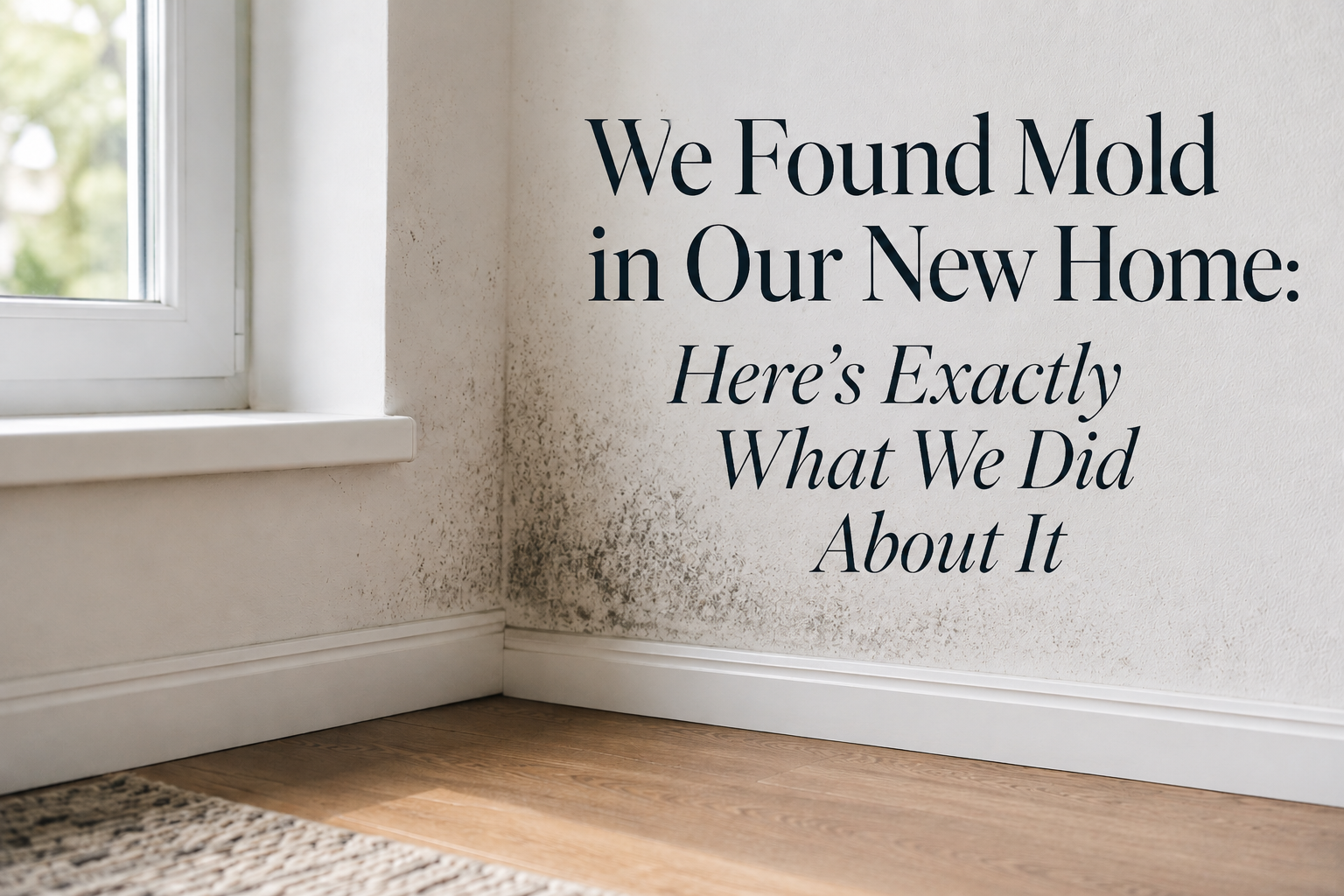
We Moved Into a Brand New Home and Found Mold
When most people think about mold, they picture a neglected rental, a damp basement, or a house that hasn't been touched in decades. They do not picture a new home. And yet, that is exactly where we found it.
Right before moving in I noticed a very slight smell in the house, and then saw a TINY bit of mold on a vent in the bathroom upstairs. Plus I noticed the humidity in the house was 67% on the upstairs AC unit and 69% on the downstairs unit.
What we found confirmed it: mold.
This didn't surprise me given Dallas is frequently ranked as one of the worst, if not the #1 worst, city in the U.S. for outdoor mold allergies. Approximately 47% of U.S. homes have issues with mold or dampness, with some estimates suggesting up to 70% contain some level of mold, often hidden behind walls or in basements.
This is not a rare story. It is actually an incredibly common one — and the problem is that most people do not find out until their health is already suffering.
Why Mold Is More Common Than You Think
At least 45 million buildings in the United States have unhealthy levels of mold. And of the 21.8 million people reported to have asthma in the U.S., approximately 4.6 million cases are estimated to be attributable to dampness and mold exposure in the home.
Mold is not a niche problem. It is a public health problem that we have collectively decided to underreact to.
Why Modern Homes Are Part of the Problem
Here is something the construction industry does not advertise: the way homes are built today is a big part of why mold is so prevalent. Modern construction prioritizes airtightness for energy efficiency, which sounds like a good thing until you realize that a home that cannot breathe is a home where moisture gets trapped.
Add to that:
-
HVAC systems that are oversized for the space they're conditioning, which means they cycle on and off too quickly to actually dehumidify the air
-
Insulation that is installed improperly, creating cold spots where condensation forms inside the walls — invisible to you, ideal for mold
-
Cheap materials that absorb moisture easily and provide the perfect substrate for growth
-
Wood framing that arrives to job sites already compromised — moldy wood used to build the bones of the house before a single person ever moves in
-
Modern building techniques that seal a home so tightly that any moisture introduced during construction has nowhere to go
The result is a home that looks clean, smells clean, and is quietly building a mold problem behind walls, in vents, and above ceilings from the day it is completed.
This is not fearmongering. This is construction reality.
What Mold Does to Your Health
This is the part where I need you to take mold seriously if you have not been.
Mold is not just an aesthetic problem or a property damage issue. It is a health issue — and it can be a severe one. The mycotoxins that mold produces are secondary metabolites that your body does not know what to do with. Dampness and mold are associated with a 30–50% increase in rates of respiratory illnesses.
But it goes far beyond respiratory symptoms. Extended exposure to mold has been linked to short-term memory loss, lightheadedness, dizziness, blurred vision, ringing in the ears, and loss of cognitive function — also known as "brain fog." Studies have also associated prolonged mold exposure with increased levels of depression, anxiety, and stress in both children and adults.
Skin rashes, fatigue, dizziness, flu-like symptoms, nausea, respiratory and eye irritation, immunosuppression, birth defects, lung inflammation, and cancer have been associated with exposure to mycotoxins.
I see this clinically all the time: eczema that will not calm down, recurring candida, histamine reactions, chronic fatigue, anxiety, hormone dysfunction, fertility struggles, and gut healing protocols that stall until the environmental piece is addressed.
If you have been chasing symptoms — fatigue that does not resolve with rest, brain fog, hormonal disruption, persistent respiratory issues, recurring infections, anxiety that came out of nowhere — mold deserves a place on your list of suspects. One that moves up significantly if you have also noticed musty smells, visible discoloration, or recent water intrusion anywhere in your home.
Mold does not announce itself with a neon sign. It works slowly and quietly, and the damage accumulates over time. The longer you wait, the worse the problem gets — and the more expensive remediation becomes. That is not designed to scare you. It is designed to motivate you to act now rather than later.
How We Tested Our Home
When I suspected a problem,I paused our move, and acted fast. I brought in a certified mold testing company to do air samples, swabs, and mold dogs.
Air testing
The first step was air quality testing throughout the house. Air testing gives you a snapshot of what is actively circulating in your indoor environment — the spore load you and different mycotoxins that you and your family are breathing in every day. An outdoor sample is taken simultaneously to establish a baseline, since mold exists naturally outdoors. The indoor-to-outdoor ratio tells the story.
Swab testing of the problem area
We had visible cause for concern in a bathroom vent. A swab sample was taken directly from the area and sent to the lab for identification. This is how you confirm what type of mold you are dealing with and the severity of the contamination.
Mold dogs
Yes, this is real and yes, it works. Trained mold-detection dogs can identify mold behind walls, under floors, and in areas that neither the human eye nor standard testing equipment can reach. They are remarkably accurate and were a critical part of our investigation. If you have a significant concern or are buying a home, this is worth knowing about.
What the results told us
The testing confirmed mold in the bathroom area, in the HVAC, and especially elevated in our bedroom. This provided enough information to build a targeted remediation plan. This is exactly why testing matters before remediation — you need to know what you are dealing with, where it is, and how extensive the problem is. Flying blind into remediation is how you miss the source and end up starting over six months later.
What Remediation Looked Like
This is the part that nobody wants to talk about because it is not cheap and it is not fast. But it is necessary to achieve full remediation.
HEPA vacuuming of every surface
After fogging, every surface in the home — walls, floors, and carpets — was HEPA vacuumed. A standard vacuum will not cut it here. HEPA filtration captures particles as small as 0.3 microns, which means spores that a regular vacuum would simply recirculate back into the air are actually captured and removed. This step is non-negotiable.
Dry fogging the house
The remediation began with dry fogging throughout the entire home. Dry fogging delivers an antimicrobial solution in particles so fine they penetrate into the spaces that wipes and sprays cannot reach — inside wall cavities, above ceiling tiles, deep into porous materials. It addresses both mold spores and mycotoxins.
Bathroom remediation
The bathroom itself required targeted remediation — removing and replacing the affected materials, treating the underlying structure, and ensuring the source of moisture that allowed growth in the first place was addressed. You cannot just clean over mold. You have to eliminate the conditions that allowed it to grow.
Full HVAC cleaning and dry fogging
The HVAC system received its own dedicated cleaning and dry fogging treatment. This step is critical and frequently skipped. Your HVAC is the circulatory system of your home. If mold is present anywhere in the ductwork, coils, or air handler, every time your system runs it is distributing spores to every room in the house. Cleaning the visible mold while leaving the HVAC untreated is like treating a symptom while ignoring the root cause. Certain parts of the HVAC may also need to be replaced, in our case right where the vent was infected that was critical.
What You Can Do at Home Right Now
Professional testing every year and remediation is the appropriate response when you have confirmed or strongly suspected mold. But there is one tool that every person reading this should know about for the in-between — the moment before you are sure, the house you are about to buy, the chronic symptoms you have not been able to explain.
The EMMA Test
The EMMA — Environmental Mold and Mycotoxin Assessment — is a mail-in home testing kit from RealTime Laboratories. It uses sensitive molecular detection technology to look for the presence of 15 molds and 16 mycotoxins that are the most toxigenic.
What makes it different from a basic home mold test:
-
It tests for mycotoxins, not just mold spores. Mycotoxins are the toxic compounds mold produces, and they persist in dust and on surfaces even after the mold itself has been cleaned. Standard tests miss them entirely.
-
Since household dust accumulates over months, it provides a historical record of your indoor air quality that single-point air sampling cannot match.
-
It is developed by a CAP and CLIA accredited laboratory, which matters when you are making health decisions based on the results.
Also worth noting, you can go straight to a MAC certified professional and they will do a through testing as well. Then they provide you with the information of exactly what and where the issues are in your home.
The Bottom Line on Mold: Take It Seriously Before Your Body Forces You To
Mold is not a quirky wellness concern or a topic for alarmists. It is a legitimate, documented health hazard that lives in nearly half of American homes and gets minimized at every turn — by conventional medicine, by real estate markets, by the construction industry, and by a cultural tendency to believe that if we cannot see something, it cannot hurt us.
It can. And it will, given enough time.
Mold is not just a respiratory issue. It is an immune disruptor, a neurotoxin, and an inflammatory trigger that can affect nearly every system in the body. I have seen mold show up behind chronic fatigue, anxiety, eczema, candida overgrowth, histamine intolerance, fertility struggles, autoimmune flares, brain fog, hormone dysfunction, recurring infections, and “mystery symptoms” no one can explain.
The problem is most people keep trying to heal their body while staying inside the environment making them sick. So the protocols stall. The symptoms keep cycling. And they blame themselves instead of looking at the house.
If you suspect mold, act now. Test first so you know what you are dealing with. Hire a qualified testing company and remediator. Do not skip the HVAC. And if you have been chasing symptoms that no one can explain, add your environment to the list of suspects — and move it toward the top.
Your home is either supporting your health or compromising it. There is no neutral.
If you are ready to find out which one it is — and to build a real plan around what you find — the Gut Healing Program is exactly where to start. If mold is a possible concern, we would go through mold testing and then remediation if mold is found. Not a generic checklist. A real plan.
https://nontoxichomes.com/pages/programs
Your body cannot fully heal in a home that is making it sick. Let's fix that.

