

Cart
0
Quick Summary:
-
Most conventional candles are made from paraffin, a petroleum byproduct that can release compounds like benzene and toluene when burned.
-
A candle burning for hours in a closed room is a repeated indoor-air exposure, not a rare one.
-
Non-toxic candles use clean waxes such as beeswax or coconut, cotton or wood wicks, and essential-oil scent instead of synthetic fragrance.
-
Shop clean, essential-oil candles (20% off while stock lasts): Browse the candle collection
Non-Toxic Candles: What to Burn Instead
Candles set the mood, especially heading into fall. The problem is not candles themselves, it is what most of them are made of. Read more to learn about non toxic candles and to access our Candle Sale!
What makes a candle toxic?
Three things usually make a candle a poor choice for indoor air: paraffin wax, synthetic fragrance, and certain wicks.
Paraffin is a petroleum byproduct. Synthetic "fragrance" can hide dozens of undisclosed ingredients behind one word, the same loophole you see on personal-care labels. And older or low-quality wicks can add their own particulates to the mix.
Are paraffin candles actually bad for indoor air?
Paraffin candles can release volatile organic compounds, including benzene and toluene, as they burn.
The key word is repeated. A candle you burn for hours, in a room with the windows closed, is a recurring exposure rather than a one-off. Good ventilation (or shorter burn times) helps, but choosing a cleaner candle in the first place removes the issue at the source.
What is a non-toxic candle made of?
A cleaner candle starts with a clean wax, a simple wick, and honest scent.
-
Wax: beeswax or coconut wax instead of paraffin.
-
Wick: cotton or wood, lead-free.
-
Scent: pure essential oils rather than synthetic fragrance.
We did the work of finding the best non toxic options for you: Shop the candles.
Do clean candles smell as strong as regular ones?
No, and that is worth saying plainly. Essential-oil candles have a lighter, more subtle scent than synthetic-fragrance candles, which are engineered to fill a room.
That softer throw is the honest trade for skipping synthetic fragrance. For a lot of people, especially anyone sensitive to fragrance, that is exactly the point. Not to mention synthetic fragrance can be a catch-all for chemicals hiding in your product.
How to choose a non-toxic candle (and a fall pick list)
Read the wax, the wick, and the scent source, in that order, before you read the pretty label.
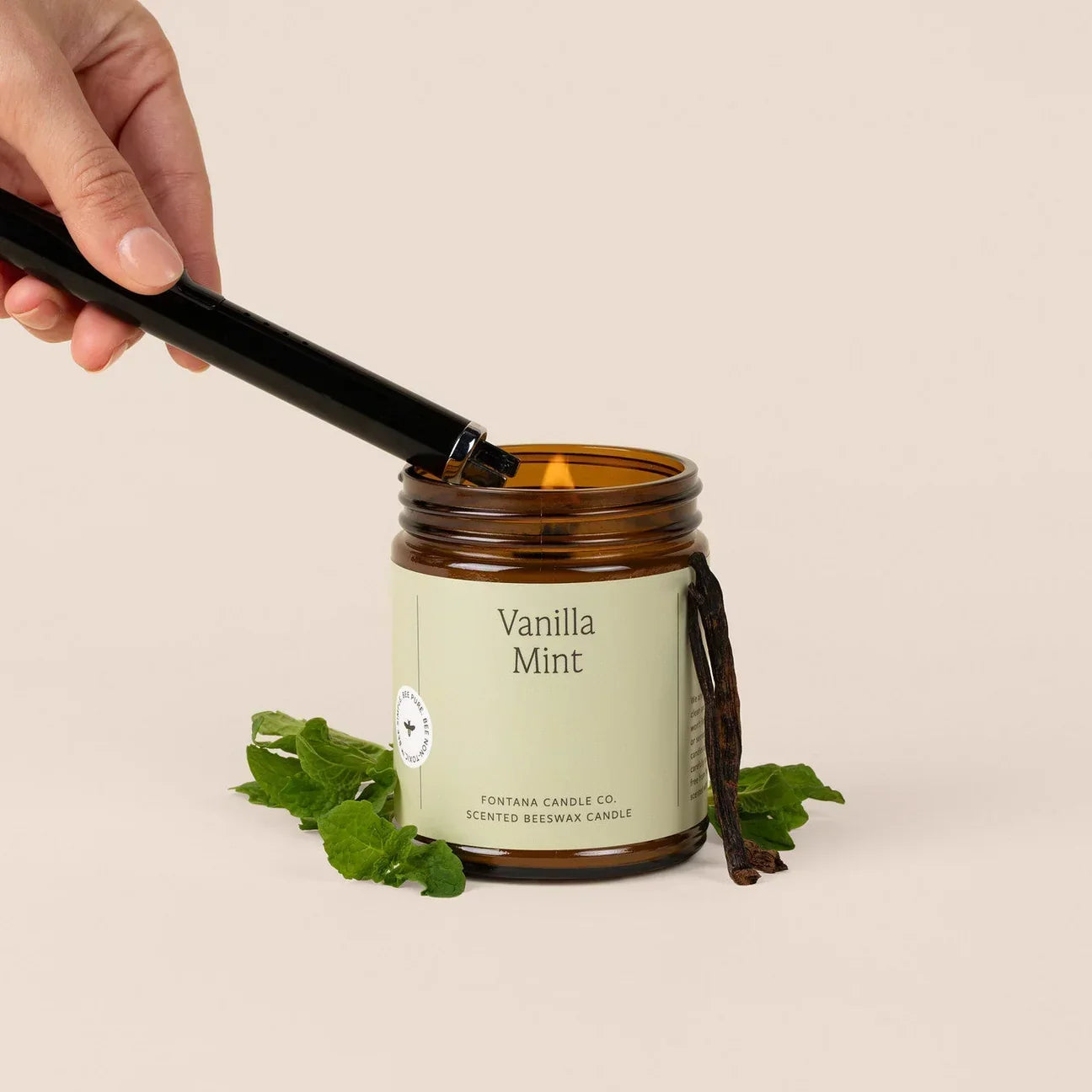
Our candle collection is beeswax and for a limited time starting 9/4/2026, every candle is 20% off while stock lasts. Shop the candles.
----------------------------------------------------------------------------------
Frequently Asked Questions
Are soy candles non-toxic?
Soy is often marketed as a clean option, but the scent source matters just as much as the wax. A soy candle scented with synthetic fragrance still carries that concern. Beeswax and coconut waxes scented with pure essential oils are our preference.
Why can't I smell the candle when it isn't lit?
Synthetic fragrance is engineered to off-gas at room temperature, which is why conventional candles perfume a room before you ever light them. Essential oils release scent through heat, so the throw builds as the candle burns. Less scent sitting in your air all day is a feature, not a defect.
What certification should I look for?
MADE SAFE is a strong signal, since it screens products against toxins known or suspected to harm human health. Always read the full ingredient list too.


About Caitlin

I’m Caitlin Fierro, a certified Holistic Nutrition Consultant, Toxic Load Expert, RWS Practitioner and a member of the National Association of Nutrition Professionals (NANP). My passion is guiding families toward a healthier, non-toxic lifestyle.
Recent Post


Tags
Shop our Non Toxic Products
